


Every academy owner knows the feeling after a great seminar or competition weekend: the team comes back closer. An international training retreat takes that to another level. A week of training, meals and adventure together turns students into teammates and teammates into lifelong friends. Here’s how to plan one, and how to avoid getting buried in the logistics.
Why host a retreat?
- Community. Shared travel builds the kind of loyalty a normal class schedule can’t.
- Progress. Two or three sessions a day for a week compresses months of training into days.
- Revenue. Hosts set their own instructor fee on top of group pricing, creating income beyond monthly memberships.
- Retention and recruiting. A trip on the calendar gives members something to work toward, and gives prospective students a reason to join.
Step 1: Pick the right destination
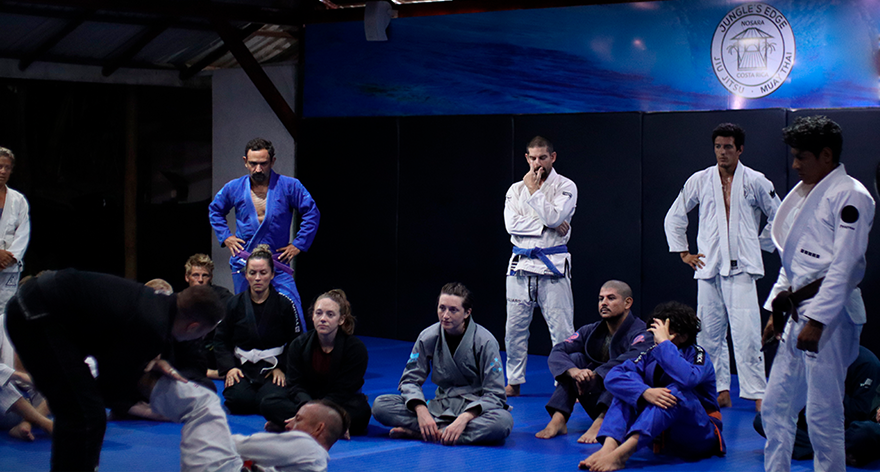
Look for a place where the training is built in, not bolted on: proper mats, instruction for mixed levels, good food and room types that suit couples, solo travelers and groups. A destination with activities for non-training partners makes it easier for families to say yes. That’s why many academies choose Jungle’s Edge in Nosara, which combines open-air mats with surf, yoga and an all-inclusive setup.
Step 2: Choose dates early
Give your students six to twelve months’ notice so they can request time off and budget. Avoid your local competition calendar and consider the destination’s seasons. In Costa Rica, the dry season runs December to April and the green season May to November.
Step 3: Set your price and your instructor fee
Your retreat price is the group rate for accommodation, meals and training plus your own instructor fee. Keep it simple for students: one clear price, what’s included, and a deposit and payment schedule.
Step 4: Plan the week
A typical rhythm is a morning session, big breakfast, downtime through the hottest hours, then an afternoon or evening session. Leave room for a group surf lesson, an excursion and at least one team dinner. Those are often the moments people remember most.
Step 5: Promote it like an event
Announce it in class, post it on social media, and give students a single link with dates, price and everything included. Early-bird deadlines help fill spots faster.
You bring the community. MATCO builds the travel infrastructure.
Let MATCO handle the back office
The hardest part of hosting isn’t teaching. It’s everything else: negotiating with resorts, collecting deposits, tracking balances, rooming lists, airport transfers and answering the same questions forty times. MATCO handles registration, payments, rooming, transfers and traveler support, and gives your retreat its own page where students request their spot. You focus on teaching.
Learn how hosting works or apply to host a retreat.